Studying Linguistics Languages & Cultures
for the Global & Digital Age
We are an interdisciplinary department that focuses on three areas: linguistics, language learning and teaching, and cultural studies. Our programs are national leaders in teaching, research, and outreach.
We offer
Field-Leading Research
Faculty research explores cutting-edge questions in a wide-range of disciplines, employs a diverse set of methods, and is closely linked to educational goals and student experiences in the classroom.
Focus on Education
We emphasize student learning, from first-year undergraduates through advanced doctoral candidates, with a focus on critical thinking, problem solving, and cross-cultural understanding.
Community Engagement
Our teaching and research make languages and issues of language and culture accessible to the greater Mid-Michigan region and reflect a continuing concern for the local, national and global community.
Degree opportunities
Linguistics
minor, ba, ma, phd
Our Linguistics programs focus on areas of core areas of theory, in experimental and field research, and in particular languages.
Second Language Studies
phd
The SLS Ph.D. Degree Program is for researchers and teacher-researchers interested in second language acquisition (SLA) and applied linguistics.
tesol
minor, ma
In our Masters of Arts program students gain an understanding of the principles of the field as they prepare to develop their careers in the field of language learning and teaching.
Arabic
minor, ba
Our program provides a nationally competitive program that equips students with excellent communicative skills necessary to engage within a globally expanding Arabic-speaking community.
chinese
minor, ba
Our program emphasizes language competence and a rich knowledge of Chinese culture and society through proficiency-oriented, communicative, situational, and study-abroad activities.
german
minor, BA, MA, PHD
Our degree programs provide a solid grounding in the core disciplinary areas of literature, culture, and language studies through teaching and research opportunities.
Japanese
minor, ba
The goal of the Japanese program is to equip students with functional proficiency in the language as well as cultural familiarity and knowledge about Japan.
Russian
minor, ba
Our program in Russian at MSU is designed to help you develop proficiency in the Russian language, literature, and culture through study abroad and internships.
Indian & South Asian
minor
The Minor in Indian and South Asian Studies will equip students with linguistic and cultural proficiency focused on India and South Asia.
Korean
minor
This program equips students with linguistic proficiency in the Korean language and cultural literacy about Korea and its place in the world.
Degree opportunities
Linguistics
minor, ba, ma, phd
Our Linguistics programs focus on areas of core areas of theory, in experimental and field research, and in particular languages.
Second Language Studies
phd
The SLS Ph.D. Degree Program is for researchers and teacher-researchers interested in second language acquisition (SLA) and applied linguistics.
tesol
minor, ma
In our Masters of Arts program students gain an understanding of the principles of the field as they prepare to develop their careers in the field of language learning and teaching.
Arabic
minor, ba
Our program provides a nationally competitive program that equips students with excellent communicative skills necessary to engage within a globally expanding Arabic-speaking community.
chinese
minor, ba
Our program emphasizes language competence and a rich knowledge of Chinese culture and society through proficiency-oriented, communicative, situational, and study-abroad activities.
german
minor, BA, MA, PHD
Our degree programs provide a solid grounding in the core disciplinary areas of literature, culture, and language studies through teaching and research opportunities.
Japanese
minor, ba
The goal of the Japanese program is to equip students with functional proficiency in the language as well as cultural familiarity and knowledge about Japan.
Russian
minor, ba
Our program in Russian at MSU is designed to help you develop proficiency in the Russian language, literature, and culture through study abroad and internships.
Indian & South Asian
minor
The Minor in Indian and South Asian Languages and Cultures will equip students with linguistic and cultural proficiency focused on India and South Asia.
Korean
minor
This program equips students with linguistic proficiency in the Korean language and cultural literacy about Korea and its place in the world.
Play Video
$2.5M Grant Furthers Teaching of Less Commonly Taught Languages
Michigan State University was awarded a four-year, $2.5 million grant from The Andrew W. Mellon Foundation to support further development in the research and teaching of less commonly taught languages (LCTLs), with an emphasis on Indigenous languages.
What Influences Dialects?
What influences our dialects in different regions of the United States? Associate Professor Suzanne Evans Wagner studies the social meaning of language with the goal of understanding what motivates us to talk the way we do over time.
Play Video
Featured News
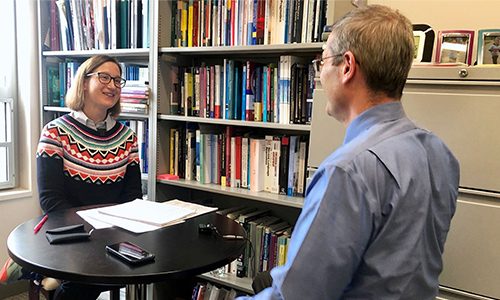
LAE Podcast Hosts Associate Professor of Linguistics Paula Winke
Episode two of the Liberal Arts Endeavor Podcast is out! Our host, Dean Christopher P. Long, spoke with Associate Professor of Linguistics Paula Winke in her Wells Hall office about foreign and second language testing…
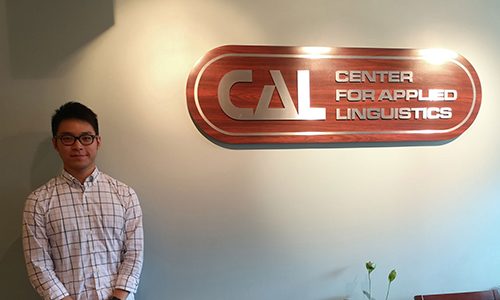
M.A. Student Interns at Center for Applied Linguistics in Washington, D.C.
Tatsuya Aoyama, a second-year M.A. student in the Teaching English to Speakers of Other Languages (TESOL) program, spent this past summer in Washington, D.C., where…
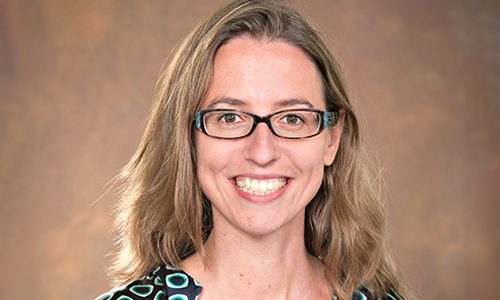
Professor Receives Research Award, Selected to EuroSLA Executive Committee
Aline Godfroid, Associate Professor of Second Language Studies and TESOL, is being recognized for her outstanding research in the area of second language acquisition and…
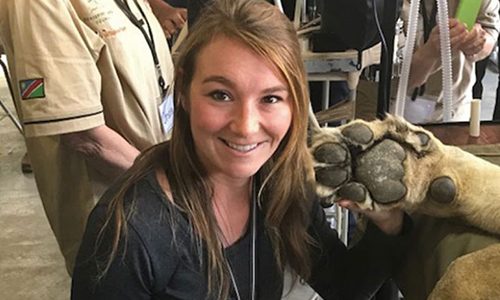
MSU alumna Kelsey Prediger works with cheetahs in Namibia, Africa, as the Conservation and Tour Manager of the Solitaire Activity Centre for the Solitaire Land Trust.
Sociolinguistics Lab Brings Magic and a Word Battle to Grandparents University
Students and faculty from the MSU Sociolinguistics Lab offered intergenerational education this summer at MSU’s Grandparents University (GPU). GPU is a multi-day event for grandparents and their grandchildren aged 8-12. It’s a bonding experience for participants: Families can stay in the dorms and eat meals in the cafeterias, as well as take part in a […]
Russian Program Initiates New Study Abroad Program in Latvia
When the United States government advised American citizens to leave the Russian Federation after Russia’s invasion of Ukraine, plans for students to study abroad in Russia had to be discontinued for the foreseeable future. Professor Jason Merrill, one of the co-directors of the MSU Russian language study abroad program in Russia, had already investigated new […]
Language Students View Planetarium Shows in German and Russian
Several language instructors from the Department of Linguistics, Languages, and Cultures have been teaming up with the Abrams Planetarium to offer planetarium shows to their students in German and in Russian. The Center for Language Teaching Advancement facilitated connections between the planetarium and the language instructors. More information can be found here: https://celta.msu.edu/projects/planetarium-languages-partnership/ The shows […]
Faculty Receive Catalyst Innovation Award for H5P Pilot Program
Adam Gacs and Shannon Quinn, instructors in the Department of Linguistics, Languages, and Cultures, have been part of a community of language teachers that have been using H5P for years. H5P, an application that allows faculty and curriculum designers to easily create innovative and interactive online activities, has been used in their courses since approximately […]
“I am often praised for my editing ability and clear explanations, not only in the context of language but also in the context of machine learning theory/implementation lectures and demonstrations. I owe these skills to my degrees at MSU.”